Tiffany Earley-Spadoni
Associate Professor of History, University of Central Florida · Director of the Kurd Qaburstan Project
Tiffany Earley-Spadoni is an archaeologist and historian of the ancient Near East specializing in the archaeology of Mesopotamia, Urartu, and landscape archaeology. Her research focuses on the socio-political developments that led to the emergence of the world’s first empires. By integrating large-scale field excavations with spatial analysis, geographic information systems (GIS), and digital humanities methodologies, she investigates the sociopolitical organization of ancient city-states and empires.
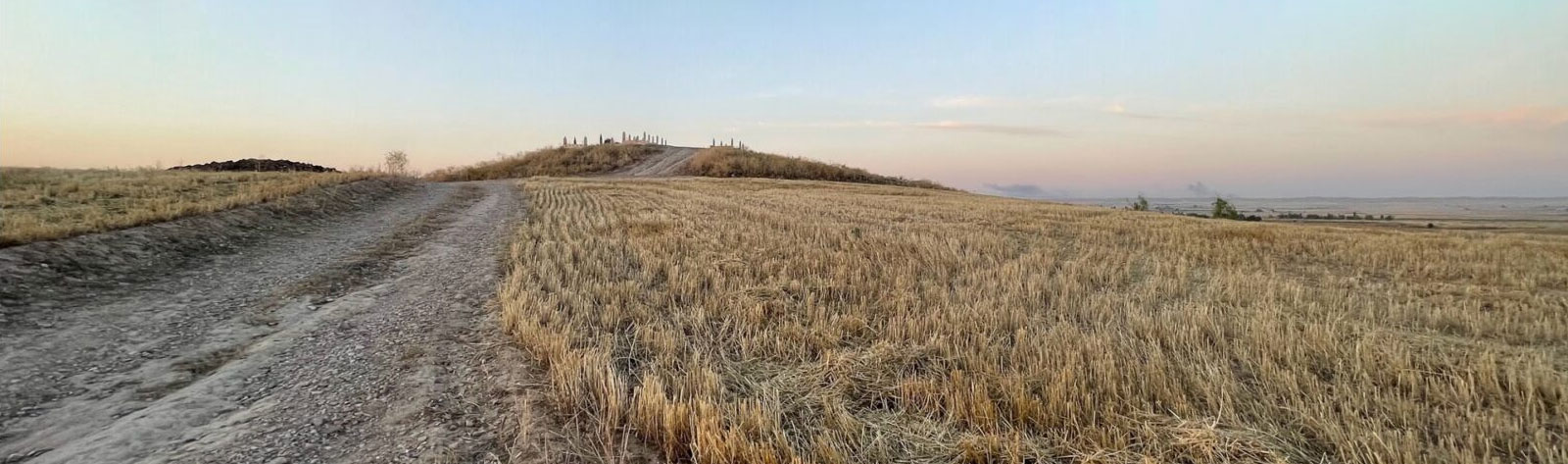
As a specialist in the archaeology of northern Mesopotamia, she is the current director, project PI, and permit holder of Kurd Qaburstan in the Kurdistan Region of Iraq, uncovering the architectural, administrative, and spatial footprint of a major Bronze Age city-state.
Urartu, Highland Empires & Landscape Archaeology
Dr. Earley-Spadoni is a leading scholar of Urartu, the powerful first-millennium BCE empire that rose across the highlands of eastern Anatolia, the southern Caucasus, and northwestern Iran to oppose the Assyrian state. Her monograph, Landscapes of Warfare: Urartu and Assyria in the Ancient Middle East (University Press of Colorado, 2025), received the Frank Moore Cross Award from the American Society of Overseas Research (ASOR), the field’s principal scholarly honor for a book in ancient Near Eastern history.
Her work in landscape archaeology explores the macro-level transitions and territorial infrastructures that allowed early states to evolve into expansive imperial entities. This highland fieldwork, including her leadership of the Vayots Dzor Fortress Landscapes Project in Armenia (2016–2022), combines geospatial survey with intervisibility analyses of fire beacon networks. Her second monograph, Before Empire: Violence, Mobility, and the Search for Universal Sovereignty in Syro-Mesopotamia, traces the volatile socio-political developments and shifting ideologies of power during the crucial transitional centuries that preceded imperial consolidation.
Mesopotamian Archaeology: Fieldwork at Kurd Qaburstan
In the field of Mesopotamian archaeology, Dr. Earley-Spadoni’s current excavations at Kurd Qaburstan are redefining our understanding of Middle Bronze Age urban planning, empire building, and warfare. Supported by a National Science Foundation (NSF) Senior Research Award (Grant 2344957), the project investigates one of the largest urban centers on the Erbil Plain of northern Iraq and builds the case for the site as ancient Qabra.
Recent fieldwork has yielded remarkable, high-resolution evidence of a Mesopotamian city under active siege and collapse. Excavators recovered roughly twenty cuneiform tablets and more than one hundred clay sealings, and the tablet archive reveals that the complexities of regional organization at Qabra. The project documented two destruction levels at the Lower Town East palace, deposits containing the physical remains of the fallen. Meanwhile, the site’s monumental fortifications and centralized layout corroborate historical descriptions of the city as described by the famous Dadusha stele.
Digital Archaeology, GIS & Spatial Analysis
Bridging the humanities and sciences, Dr. Earley-Spadoni’s work utilizes innovative digital methodologies to document, analyze, and preserve ancient cultural heritage. She co-designed the Digging Up Data program with the Alexandria Archive Institute, which develops open-access educational resources and data literacy initiatives for the ancient world.
Her field methods pair traditional stratigraphic excavation with centimeter-level geolocation, digital storytelling, and GIS. She also serves on the editorial board of the International Journal of Humanities and Arts Computing.
Primary research fields: Mesopotamian archaeology, Urartu and highland empires, landscape archaeology, GIS and spatial history, ancient warfare and fortification networks, cuneiform traditions, and digital archaeology.
Selected recognition: Frank Moore Cross Book Award (ASOR, 2025); National Science Foundation (NSF) Senior Research Award (2344957); NEH Summer Stipend Fellowship.
Google Scholar · ResearchGate · UCF Faculty Profile · Kurd Qaburstan Project Homepage