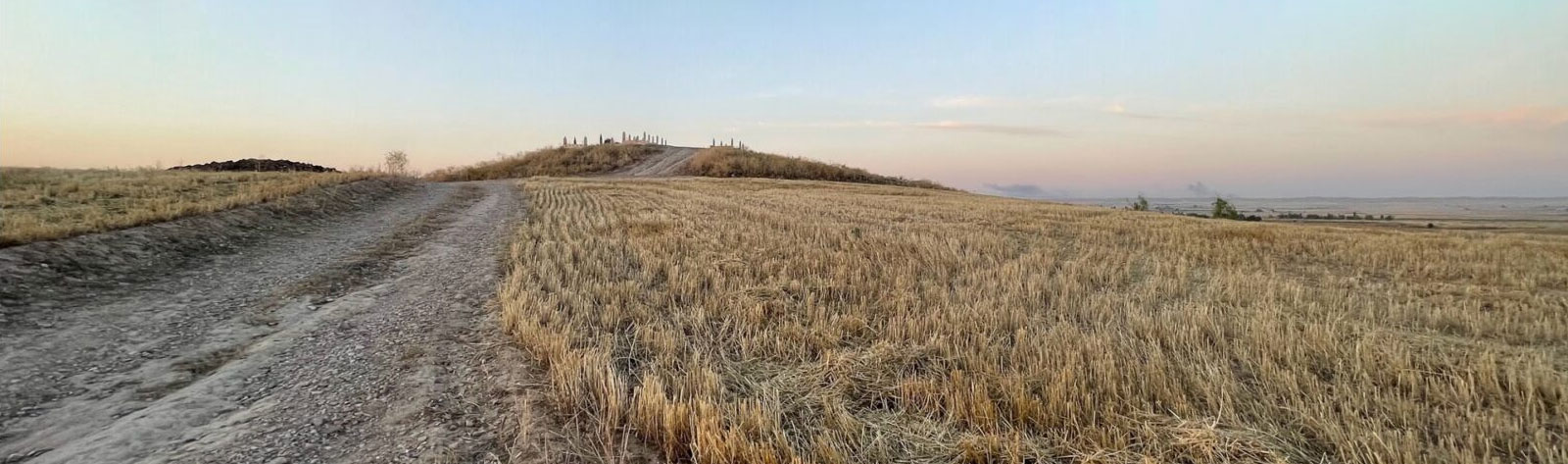
UCF’s Kurd Qaburstan Project made remarkable discoveries in 2025 that substantially deepen the case for identifying the site with ancient Qabra and shed new light on the city’s violent end. Excavations in the lower town palace, residential neighborhoods, and a sounding on the eastern slope of the high mound, combined with the completion of the project’s large-scale geophysical survey, produced findings that connect the archaeological record directly to historically documented events of the early second millennium BCE.
Lower Town East Palace
Excavations expanded the known plan of the lower town palace across three new units. The team uncovered evidence of two successive destruction events separated in time but similar in character: dense artifact deposits, ashy lenses, architectural rubble, and human remains interred without care or ceremony. The new units extended the palace plan both northward, into what appears to have been a food storage and processing area, and southward, into the palace’s administrative core.
Investigations in the southern administrative sector proved incredibly informative about the sophisticated bureaucracy of this ancient city (Figure 1). Units there have yielded more than 100 clay sealings and twenty cuneiform tablets, the largest collection of written documents ever recovered from the Erbil Plain. Clay sealings were used in ancient Mesopotamia to authenticate containers, doors, and documents, much like a wax seal or modern document signature. Many of the tablets are administrative records: lists of commodities, including ingredients for beer production and quantities of copper, as well as a letter and other documents still under study by project epigraphers. Three of the tablets share a date that places them in a specific year attested in Assyrian records, anchoring the palace’s destruction to a precise historical moment consistent with the siege of Qabra as described on the Victory Stele of Dadusha, a royal monument discovered in modern-day Iraq.
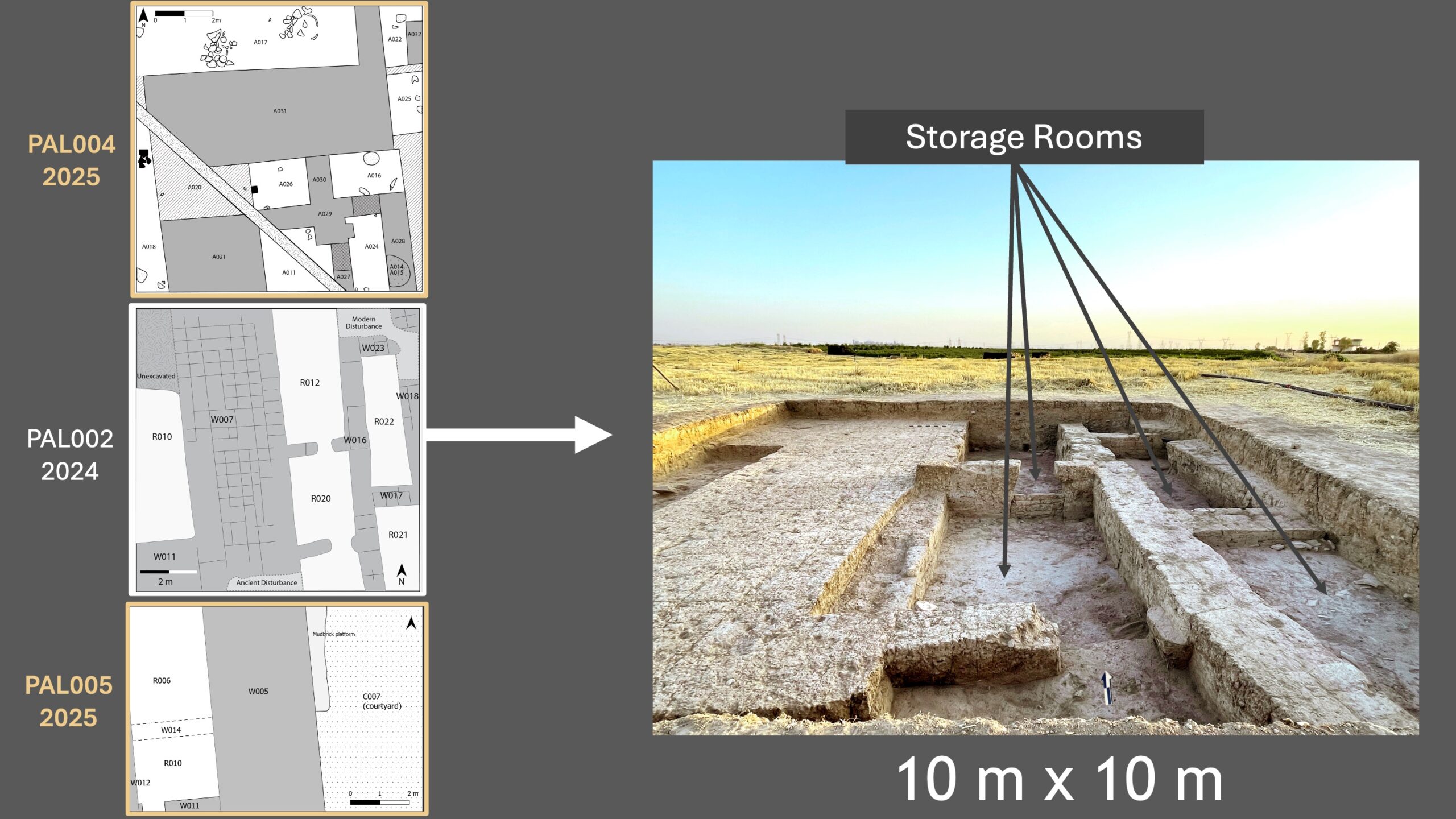
Figure 1: Southern administrative district of the Lower Town East palace
The letter, recovered from the southern sector, is one of the season’s most significant finds. It was written by a man named Mutu-Kumri. This name appears in just one other ancient document: a letter from the famed archives of Mari. In this letter, he is identified as a senior official of Qabra. If the two references are to the same individual, then archaeologists have found a letter written by a named historical figure in the very building he administered, a connection between text and place that is exceptionally rare in the archaeology of the ancient Near East.
Each destruction of the palace claimed the lives of people across the full social spectrum of the palace community. Seventeen human skeletons were recovered across three excavation units, none buried with any grave goods or funerary care. In the southern administrative sector, eight adults, likely all men, were found piled together in a small room amid the destruction debris, their bodies overlapping and largely prone. To the north, in an area provisionally interpreted as a food-processing and storage space, the skeletal remains of men, women, and children showed evidence of years of hard physical labor. The presence of the dead throughout the destruction layers, across both the administrative and working areas of the palace, points to a sudden, catastrophic end rather than a planned abandonment. The individuals’ remains will undergo aDNA testing in collaboration with Ludwig-Maximilians-University and the Max Planck Institute.
Geophysical Survey
This season, the project completed its magnetometer survey of nearly the entire accessible area within the city walls, a project that began in 2014. The resulting dataset covers more than 80 hectares and may represent the most complete subsurface view of a Mesopotamian city produced in a single phase of investigation. The survey also extended outside the city walls, revealing additional structures and clarifying the course of the city’s outer fortifications. Among the most striking discoveries was a 165-meter stretch of the city wall studded with towers more than 8 meters wide, a close match for the fortifications depicted on the Victory Stele of Dadusha.
Northwest Neighborhoods
Excavations in the city’s residential neighborhoods in the northwestern part of the site continued to build a picture of everyday urban life. A new unit opened directly south of a courtyard drain discovered in 2024 revealed a city street surfaced with pottery sherds and pebbles for drainage and traction, alongside an engineered ceramic drain system that connects to that earlier find, evidence that neighborhood infrastructure was planned collectively rather than improvised household by household. To the west of the street, the adjacent domestic interior contained a large storage vat, a basin, stone weights, and a bone awl, pointing to a household engaged in food processing and textile production.
High Mound Sounding
A small sounding on the high mound in the central part of the site investigated a large building, first identified through geophysical survey in 2024. The recovery of distinctive Middle Bronze Age pottery confirmed the building’s date and provided a floor level for future excavation. The structure, with a roughly square plan comparable to known palaces of the period, will be a focus of future seasons.
Conservation
The tablets and sealings recovered from the southern administrative sector of the palace in both the 2024 and 2025 seasons were conserved by Carmen Gütschow, whose work transformed fragile, largely unreadable objects into legible historical documents (Figure 2). The project also organized a conservation training workshop at the Iraqi Institute for the Conservation of Antiquities and Heritage in Erbil, where it shared Gütschow’s methods with local museum professionals. Conservation was supported by ASOR’s Shepard Urgent Action Grant and the University of Central Florida’s College of Arts and Humanities.
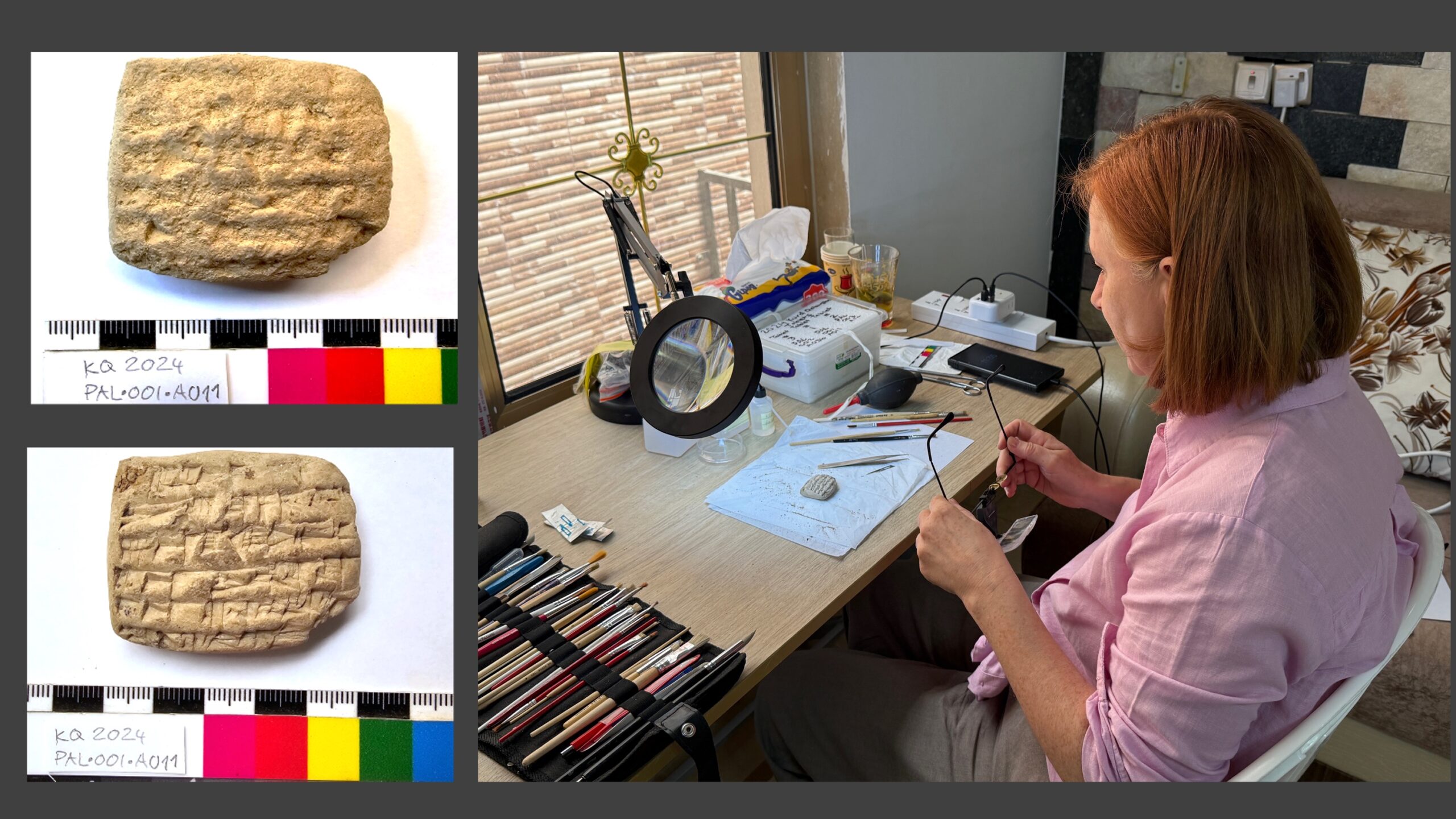
Figure 2: Tablet conservation at Kurd Qaburstan