PFC John Pasco Jones (December 5, 1914 – November 18, 1944)
2nd Infantry Regiment, 5th Infantry Division
by Aaron Pablo
Early Life
John Pasco Jones was born on December 5, 1914, to Pasco and Wilma Jones in Callahan, FL, a small city in Nassau County.1 John’s parents owned and operated a family farm that had been valued around $2000.2 In addition to John, their eldest, the Jones’ had six daughters: Loraney (1917), Esther (1918), Carrie (1921), Clara Belle (1923), Louise (1925), and Emily (1927).
By the time the Great Depression began around 1930, John completed eighth grade. Likely out of necessity, John did not continue school and helped as a farmhand on the family farm. Comparably, many of John’s sisters had a complete education. The Jones’ lived through the Great Depression, which hit especially hard in Florida because of the Great Miami Hurricane of 1926, which caused $100 million of damage and effectively put an end to the Florida land boom.3 The combination of a devastating natural disaster and a subsequent economic recession meant that Florida was hit especially hard by the Great Depression a few years later.4
John’s mother, Wilma, died on August 29, 1938, from lung complications.5 The children lost their mother at the height of the Depression when John was twenty-two, Loraney was nineteen, Ester was eighteen, Carrie was sixteen, Clara Bell was fourteen, Louise was twelve, and Emily just ten years old. Despite so much trauma, the family kept their farm by working together.6
On November 18, 1938, John married Addie Simms, in Baker County, FL.7 While we are not sure how John and Addie met, we know that Addie grew up in St. Mary’s Home, an orphanage in Jacksonville, FL, with her siblings.8 John and Addie, the newly married couple, moved onto the Jones’ family farm. They lived with Pasco, Albert and Carrie Alvarez, John’s sister and brother-in-law, and John’s youngest sisters Louise and Emily.9 While the Depression must have been a major factor in their lives, even without the world-wide economic crisis,the Jones family, like other farming families in Florida in the early twentieth century, struggled to make ends meet.10 By the time John was in his mid-twenties, he and his wife, Addie, both worked as bus drivers for the Callahan school district.11 In October 1940, John registered for the draft.12
Military Service
John reported to the US Army on May 5, 1943, at Camp Blanding, FL, where he joined the 2nd Infantry Regiment (IR) in the 5th Infantry Division (ID), otherwise known as the “Red Diamonds.”13 The name came from the unit’s time serving in the First World War. Artillery commander John E. McMahon put forward the idea of the red diamond insignia from the Diamond Dye company, which used the ace of diamonds and the slogan: “it never runs.”14 Throughout World War I, the 5th ID erected monuments with their Red Diamond logo that remain along their 1918 path in eastern France, such as the one seen here in the Vosges.15
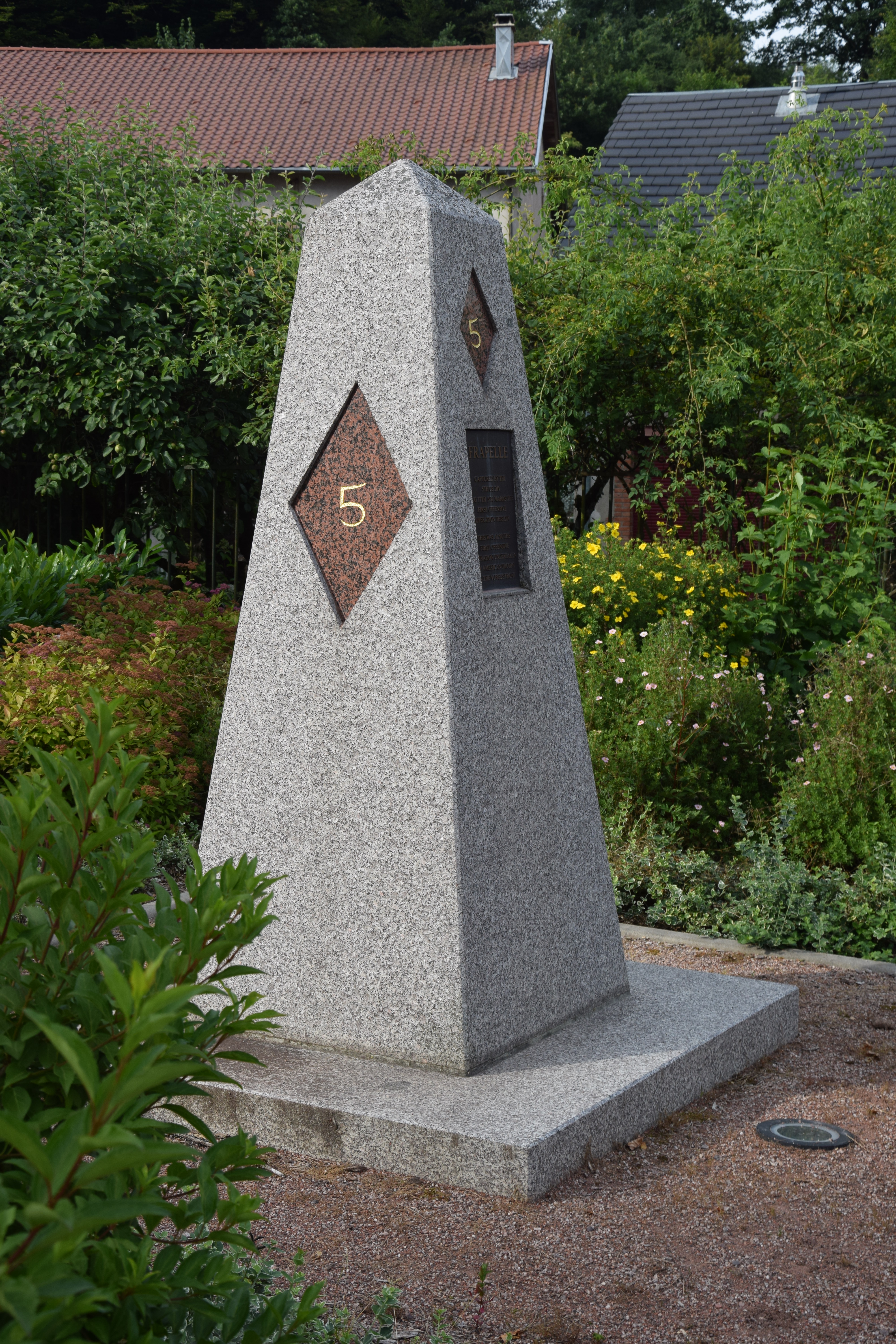
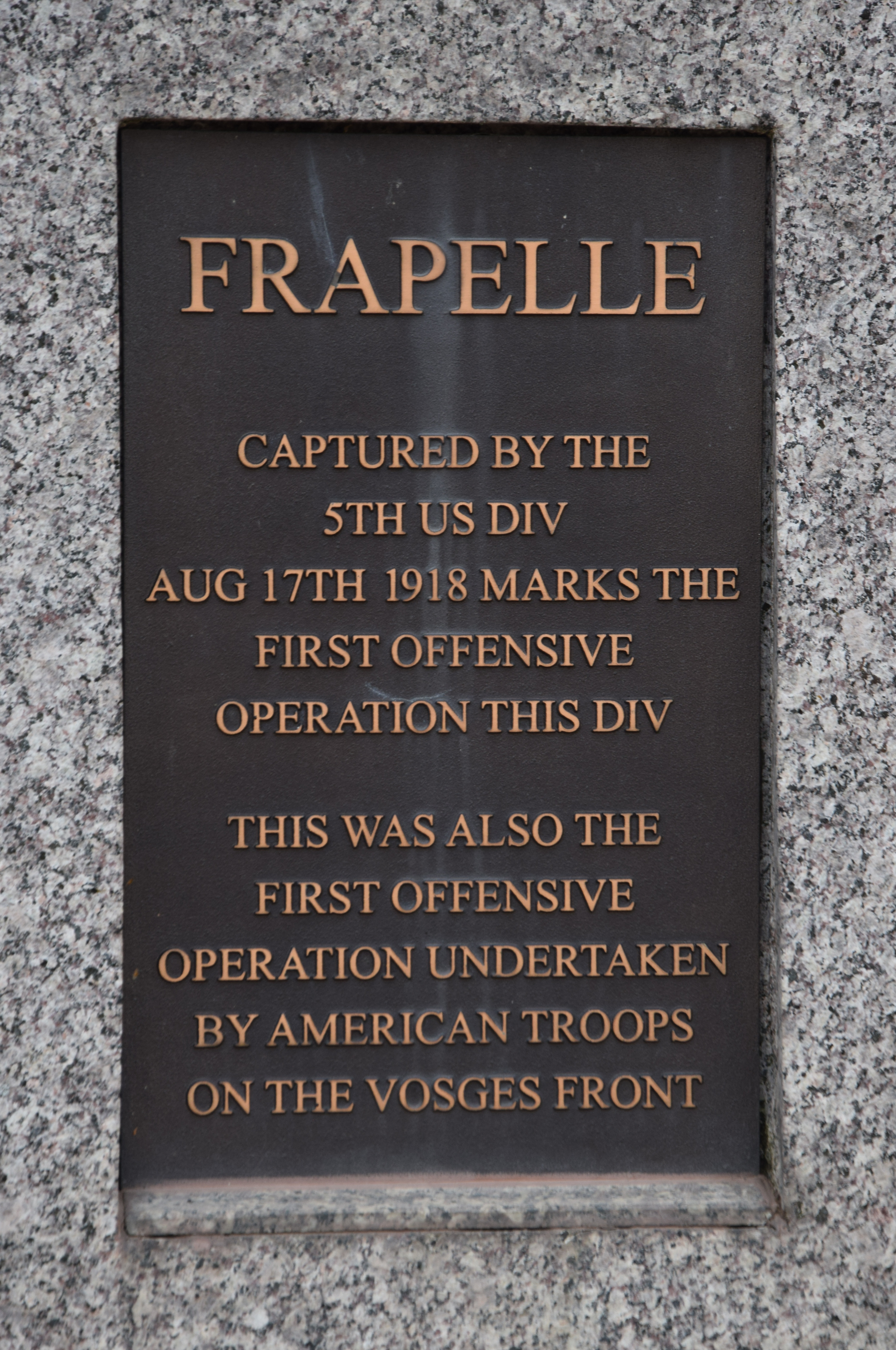
John trained for winter warfare at Fort Custer in southern Michigan, before joining the 5th ID already deployed to Iceland.16 The 5th ID had deployed on March 3, 1942 to Iceland, over a year prior to John’s enlistment in the Army. Even before the US entered World War II, Iceland’s US representative, Vilhjalmr Thor, asked, in July 1941, for the State Department to place Iceland under US protection according to the Monroe Doctrine.17Though considered outdated, the 1823 Doctrine provided a diplomatic loophole for the US to protect British interests while also maintaining neutrality.18 The British occupied Iceland until the US took control later that year. The U.S determined that control of Iceland would help protect American trade in the Atlantic, as well as serve as a base from which they could help prepare for the landings into Europe.19
John and others in the 5th ID shipped out from New York City to Reykjavik, Iceland to join the unit in summer 1943. The soldiers continued to train in defensive maneuvers utilizing the local geography. They had to learn to traverse and defend the local volcanic lava formations and bogs.20 John and other members of the 5th ID remained in Iceland until they were deployed to the United Kingdom in August 1943. After stopping in Scotland, they trained in Cardiff in the south of England.21 The division then moved to Northern Ireland on October 25, 1943 to prepare for the invasion of France. According to Hartmann Coffey, who served in the 5th ID, the division was “there for several months… and we were in training in all that time.” This included how to fight in urban environments and how to destroy fortified positions, which they would need fighting in France. The 2nd IR of the 5th ID stayed in Ireland until it returned to southern England in preparation for landing in France.22
John and the 2nd, 10th, and 11th IR, which comprised the 5th ID, landed on Utah Beach in France on July 9, 1944, about a month after the initial D-Day landings.23 Upon its arrival on French soil, the 5th ID served under the First Army’s command. On July 13, 1944, it relieved the 1st ID at Caumont-sur-Orne, in the region of Calvados, twenty miles south of the city of Caen in Normandy. The Allies used Caumont as a defensive position, and the 5th ID saw little combat there until July 21, when a German platoon attacked the town. Two days after this attack, the British army took control of the Caumont sector, and John’s 5th ID traveled twenty-six miles west, in the direction of St. Lô, to attack the town of Vidouville.24
During the Battle of Vidouville, the 5th ID’s regiments worked cohesively on different objectives to secure the town. The 10th IR on the morning of July 30 captured Hill 183 and successfully defended it from a German counter attack. From there, John’s 2nd IR and the 11th IR pushed through the Foret l’Eveque to the Vire River, where they connected with British forces on their left and the 2nd ID on their right, effectively pushing the Germans out of the area. The 5th ID’s efforts at Vidouville played a key role in the Allied push to break out Normandy and secure the region known as Operation Cobra.25
On August 4, 1944, after the Allied victory at Vidouville, John’s 5th ID fell under the command of Lieutenant-General George Patton’s 3rd Army and headed Southeast.26 On August 7, 1944, it reached the outskirts of Angers, a strategic city with bridges over the Maine and Loire Rivers. On the morning of August 8, John’s 2nd regiment of the 5th ID went Northwest of Nantes to contain any German forces from moving North or East. That night, the 11th regiment, also of the 5th ID, met heavy resistance in front of the Prunier railway bridge, the last remaining bridge over the Maine River. The Germans attempted to destroy the bridge, triggering brutal combat, but failed to stop the advancing Allied forces.27 The 2nd IR successfully captured fleeing German forces from the city, and were left to garrison Angers until it resumed its march East on August 15, 1944.28
After liberating the cities of Chartres and Fontainebleau, the Allies continued to move across Northern and Central France. The Allied advance strained supply chains and communication systems in the late summer and fall of 1944.29 To alleviate these problems, the Red Ball Express, a convoy of nearly a thousand trucks a day, ran from the port of Cherbourg to Allied depots across northern France from late August to November 1944. At about the same time, the Supreme Allied Commander, General Eisenhower, prioritized supplying the 21st Army Group, led by British General Montgomery, which fought for over two months to capture the port city of Antwerp, Belgium. This meant that starting at the end of November 1944, the Allied supply lines improved, even if they nevertheless remained strained through the harsh winter of 1944-1945.
The supply line problem affected John and the rest of the 5th ID. On September 16, the 3rd Army began its initial push into Metz, a heavily fortified city in the Moselle region of eastern France. The battle raged at the Moselle River crossing just west of the city as the Allies fought for control of Fort Driant. The Allied troops broke through the Germans’ first line of defenses during their attack, but heavy losses and lack of proper training against modern fortified positions forced them to retreat on October 13. Without sufficient logistical support, the 3rd Army had to abandon, at least temporarily, its plans to take Metz.30 Taking advantage of the Allied pause, the Germans, who had pulled out of Metz, returned and refortified the city to impede the Allied push into Germany.31
From October to November, the 3rd Army underwent specialized training in order to return and conquer Fort Driant and the rest of Metz.32 On November 8, the 3rd Army, along with John and the 5th ID, launched an assault on the city to encircle it and ultimately liberate it from the Germans. The battle was fierce; Metz had a complex system of fortifications, entrenchments and tunnels throughout the city that gave the Germans a distinct advantage and trapped the civilian population in the crossfire.33 As one member of the 2nd Infantry Regiment described it, the battle for Metz was a “meat grinder.“34 PFC John Pasco Jones died on November 18, 1944, during the intensive fighting south of Metz near the town of Sorbey.35
Legacy
John died fighting to liberate a city of vital importance to the Allied liberation of France and its march into Germany. Ten days after John’s death, the Allies liberated Metz. In December 1944, the 5th ID participated in the Battle of the Bulge, the last major German offensive, and the closing of the Ruhr pocket.36 By VE Day on May 8, the men of the 2nd IR and the 5th ID had made it all the way to Czechoslovakia; the Army tasked them with establishing administrative control in Eggenfelden, Pfarrkirchen, and Griesbach, Germany, along the Austrian border northeast of Munich, in the immediate post-war period.37
John Jones was survived by his wife, Addie, his father, Wilber, his grandmother, J. H. Jones, and his sisters, Loraney, Ester, Carrie, Clara Belle, Louise, and Emily.38 The family opted to have John rest with his comrades in arms in the Lorraine American Cemetery in St. Avold, France, block C, row 29, grave 55. At least some of John’s sisters lived long lives. Carrie and Emily survived their sister Louise who passed away in 2012 at the age of eighty-seven.39
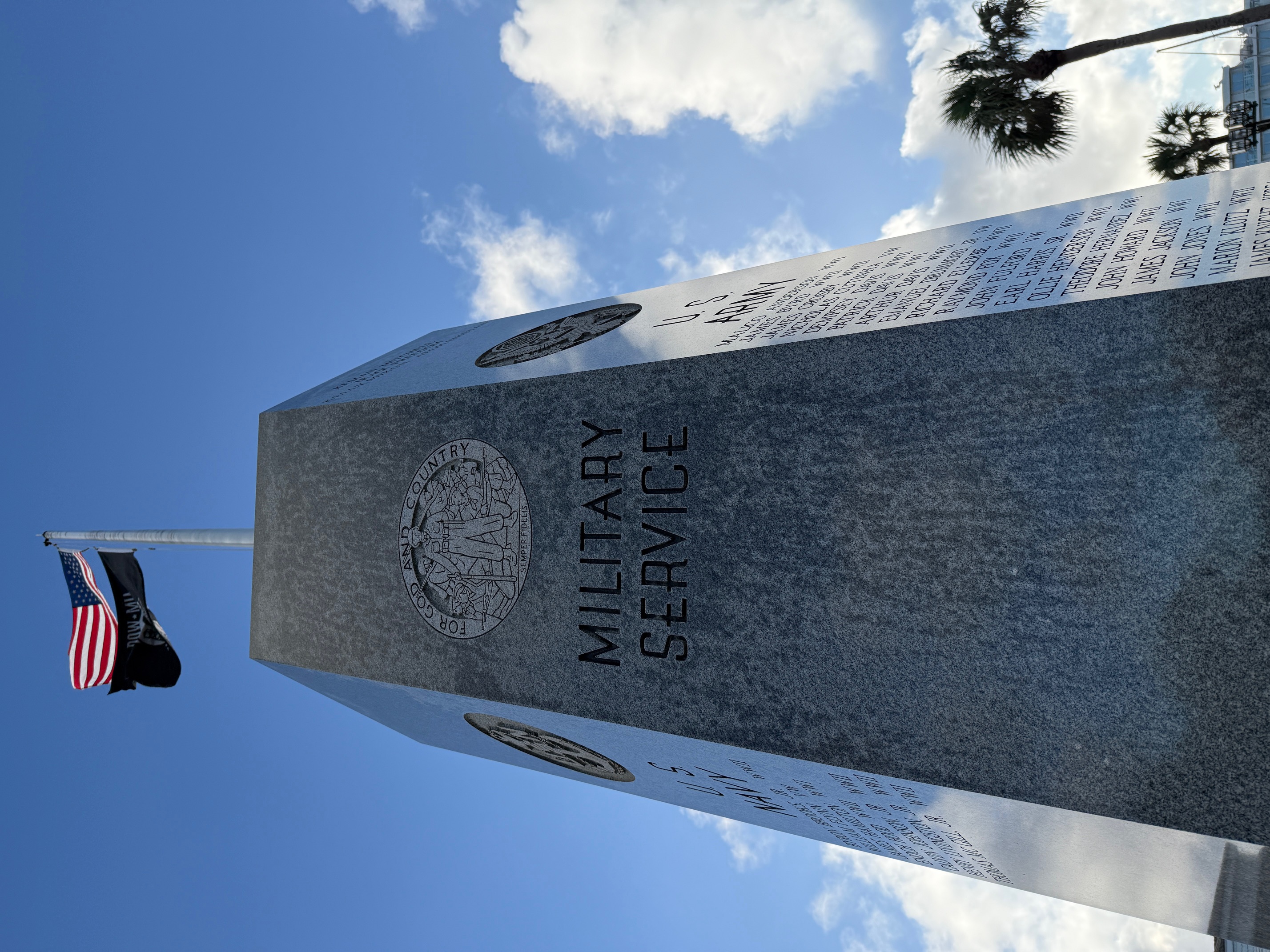
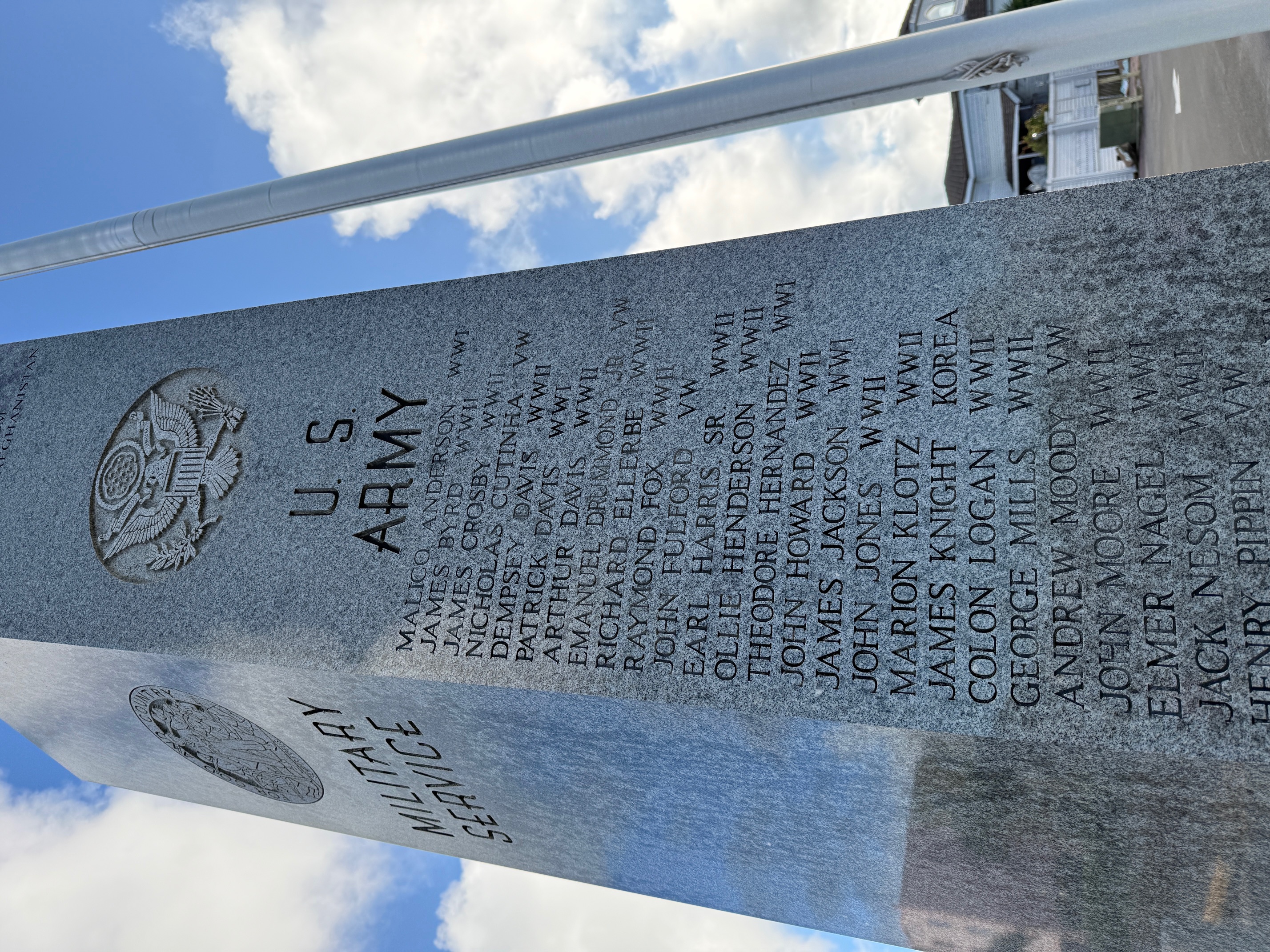
The Nassau County War Memorial, located at Fernandina Beach, on Amelia Island, FL includes John’s name to commemorate his actions and sacrifice, as seen here.40 John earned a Purple Heart as a result of his actions in battle.41 Today, visitors can follow the Dornot-Corny historic walk featuring a monument and memorial to the 5th Infantry Division in Corny-sur-Moselle, France. The stations along the walk recount the battle from crossing the Moselle River to the capture of Metz.42
1 “U.S., WWII Draft Registration Card,” database, Ancestry.com (www.ancestry.com: accessed May 5, 2026), Entry for John Pasco Jones. “United States Census, 1920”, database with images, FamilySearch (https://www.familysearch.org/tree/sources/viewedit/9JCG-RVX?context : Mar 25 2026), Entry for John P Jones, 1920. The 1920 census lists Jones’ mother Wilmer, but other documents indicate her name was Wilma.
2“United States Census, 1920”, database with images, FamilySearch (https://www.familysearch.org/tree/sources/viewedit/9JCG-TDB?context : Mar 20, 2023), Entry for Johnnie Jones, 1930.
3 Blake, Eric , Chistopher Landsea, and Ethan Gibney. 2011. “The Deadliest, Costliest, and Most Intense United States Tropical Cyclones from 1851 to 2010 (and Other Frequently Requested Hurricane Facts).” Miami, FL: National Weather Service; J. Kenneth Ballinger, Miami Millions: The Dance of Dollars in the Great Florida Land Boom of 1925 (Miami, FL: Franklin Press, 1938), 5.
4“The Great Depression in Florida.”Florida Department of State, Accessed March 22, 2023. https://dos.myflorida.com/florida-facts/florida-history/a-brief-history/the-great-depression-in-florida/.
5 “Florida, Deaths, 1877-1939,” database, FamilySearch (https://familysearch.org/ark:/61903/3:1:S3HY-6P3S-7KC?cc=1595003 : May 4 2026), Entry for Wilma Jones, Nassau County, Florida, United States. https://www.familysearch.org/ark:/61903/3:1:S3HY-6P3S-7KC?cc=1595003&personaUrl=%2Fark%3A%2F61903%2F1%3A1%3AFPHF-7Y8.
6“United States Census, 1940”, database with images, FamilySearch (https://www.familysearch.org/ark:/61903/1:1:VTCW-LSR : Mar 20 2023), Entry for John Pasco Jones, 1940.
7 “Florida, County Marriages, 1830-1957,” database with images, FamilySearch Accessed March 20, 2023. (https://www.familysearch.org/ark:/61903/1:1:VRZ8-C3R : Mar 20 2023), Entry for John Pasco Jones, Florida, United States.
8 1930 Addie’s census
9 “United States Census, 1940”, FamilySearch, Entry for John Pasco Jones, Florida, United States.
10 Gary Mormino, “The Long Decade: How Florida Navigated the Turbulent, Terrible 1930s.” FORUM (St. Petersburg, FL), Fall 2025. 20-33.
11 “United States Census, 1940”, FamilySearch, Entry for John Pasco Jones, Florida, United States.
12 “U.S., WWII Draft Registration Card,” Ancestry.com, Entry for John Pasco Jones.
13 “Electronic Army Serial Number Merged File, ca. 1938 – 1946 (Enlistment Records),” database, The National Archives, Access to Archival Database (https://aad.archives.gov/aad/record-detail.jsp?dt=893&mtch=1&cat=all&tf=F&q=34784103&bc=&rpp=10&pg=1&rid=5165340), entry for John P Jones, service number 34784103 ; U.S Army. “5th Infantry Division.” World War II Divisional Combat Chronicles. Accessed March 22, 2023. https://www.history.army.mil/html/forcestruc/cbtchron/cc/005id.htm. ; ”Headstone Inscription and Internment Records,” database, Ancestry.com (www.ancestry.com: accessed May 4, 2026), entry for John P Jones, service number 34784103.
14 John B.Wilson, Armies, Corps, Divisions and Separate Brigades (U.S Army, 1998), 115-119.
15 Photograph taken by UCF Veterans Legacy Program in 2018, https://vlp.cah.ucf.edu/
16 “Fort Custer during World War II.” Military History of the Upper Great Lakes. Michigan Technological University. Accessed March 25, 2026. https://ss.sites.mtu.edu/mhugl/2015/10/11/fort-custer-during-world-war-2/.
17 Named after him, James Monroe signed the Doctrine in 1823. It was a US diplomatic proclamation used to pressure European powers into respecting the United State’s “sphere of influence”, which included most of the Western Hemisphere. U.S. Embassy in Iceland, “History of the U.S. and Iceland,” U.S. Embassy in Iceland, accessed March 25, 2026, https://is.usembassy.gov/history-of-the-u-s-and-iceland/.
18 National Archives, “Monroe Doctrine (1823),” Milestone Documents, accessed May 4, 2026, https://www.archives.gov/milestone-documents/monroe-doctrine.
19 Fairchild, Byron. “United States Forces in Iceland, 1941.” U.S Army Center of Military History. Accessed April 30, 2026. https://history.army.mil/books/70-7_03.htm.
20 United States Army, 2nd Infantry Regiment 5th Infantry Division, 20-21. https://archive.org/details/2Inf5thID/page/n151/mode/2up
21 United States Army, The Fifth Division in France (Metz, France: 1944), 5.
22 Hartmann Coffey, interviewed by Robert Gardner for the Library of Congress’ Veterans History Project, March 31, 2003, https://www.loc.gov/item/afc2001001.05236/.
23 United States Army, The Fifth Division in France, 5.
24 United States Army, The Fifth Division in France, 4-7.
25 United States Army, The Fifth Division in France, 8. Ulick M. Hallinan, “From Operation COBRA to the Liberation of Paris: American Offensive Operations in Northern France, 25 July-25 August, 1944” (Doctoral Dissertation, Temple University, 1988), 14.
26 Hugh M. Cole, The Lorraine Campaign (Washington D.C: Center of Military history United States Army, 1993), 17. (https://history.army.mil/Publications/Publications-Catalog-Sub/Publications-By-Title/The-Lorraine-Campaign/ : accessed March 12, 2025).
27 United States Army, The Fifth Division in France, 11-12.
28 U.S Army, 2nd Infantry Regiment 5th Infantry Division, (1946), 30-34. Accessed on May 14, 2026 https://archive.org/details/2Inf5thID/page/n151/mode/2up
29 Cole, The Lorraine Campaign, 1-2, 16-17. For more information on the Allies supply chain issues, see “Keep ‘em Rolling: 82 Days on the Red Ball Express,” The National WW2 Museum, February 1, 2021, https://www.nationalww2museum.org/war/articles/red-ball-express.
30 Cole, The Lorraine Campaign, 256 – 260.
31 United States Army, The Fifth Division in France, 20.
32 Cole, The Lorraine Campaign, 1-2, 270-275.
33 United States Army, The Fifth Division in France, 28. For more information on the Battle of Metz, see Major R. Stephenson et. al., The Battle of Metz (Fort Leavenworth, KS, Army College Report, 1985) accessed on May 14, 2026, https://www.armyupress.army.mil/Portals/7/Primer-on-Urban-Operation/Documents/CSI-Battlebook-Metz.pdf.
34 Michael Bilder and James G Bilder, Footsoldier for Patton: The Story of a Red Diamond Infantryman with the U.S. Third Army (Havertown, PA: Casemate, 2008), 138.
35“Headstone Inscription and Interment Record,” entry for John P Jones. ; United States Army, 2nd Infantry Regiment 5th Infantry Division, 52-53.
36 United States Army, 2nd Infantry Regiment 5th Infantry Division, 76 – 77. Historically, the Ruhr region in Germany had an abundance of coal and became an industrial hub.
37 United States Army, 2nd Infantry Regiment 5th Infantry Division, 76-80.
38 “Pfc. John P. Jones, Jacksonville Man, Killed in Action,” The Florida Times-Union (Jacksonville, FL), 17 Dec 1944, 15.
39 “Ella Louise ‘Weezie’ Jones Brown,” Find a Grave, Accessed April 22, 2023, https://www.findagrave.com/memorial/91590179/ella-louise-brown.
40 Nassau County Florida War Memorial. Photographic credit to Fernando and Armando EhlersMay 13, 2026. We would like to thank the Ehlers family for helping us honor John Jones’ service.
41 “John P. Jones.” American Battle Monuments Commission. ABMC. Accessed March 22, 2023. https://www.abmc.gov/decedent-search/jones%3Djohn-15.
42 “Memorial 5th Infantry Division.” uswarmemorial.org. Accessed April 24, 2023. https://www.uswarmemorials.org/html/site_details.php?SiteID=359&keyword=corny ; For more information on the Moselle river crossing see, “The Historical Journey of the Dornot-Corny Battle – 1944,” Madetmoselle, accessed May 14, 2026, https://www.cc-madetmoselle.fr/fr/seconde-guerre-mondiale.html
© 2026, University of Central Florida